

My Co-op’s Renovation Project Is Bad for Residents. Can We Stop It?
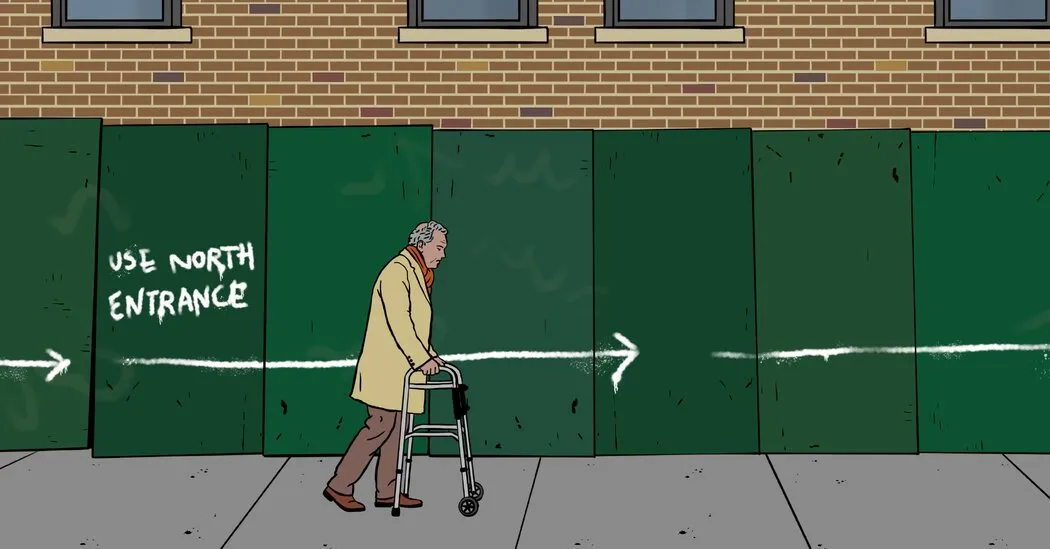
Q: We live in a co-op in New York City that has four buildings spread over several city blocks. The board is redoing the lobbies and landscaping, and wants to permanently close one of the three entrances to our building. This would mean that my husband, who uses a walker, would have to walk an extra city block each time he came and went. We have relied on the entrance they want to remove for more than 50 years. Is it legal for the board to close it when it will make life more difficult for people with disabilities?
A: Before we jump to what’s legal, you should make your position known to your co-op. If the board plans to inconvenience a cohort of the building’s population, creating hardships for people with disabilities, then board members should hear from affected residents. Banding together with like-minded neighbors can help your cause.
After you’ve made it clear that you oppose this change (and why), you can check that the board is allowed to do this work. Renovation projects that change entrances and egress routes require construction permits from the Department of Buildings. And the city code has requirements for adequate ways to enter and exit a building, which must be maintained.
You can search building permits online. File a complaint with 311 if contractors start to work and there is no evidence of a permit.
If the renovation plans comply with city law and the board has the proper permits, keep in mind that decisions made by the board are protected by the business judgment rule, as long as the decisions are legal.
“The co-op board is elected by the shareholders to make decisions for the entire building,” said Adam Leitman Bailey, who practices real estate law in New York. “Buildings are able to change.”
A person with disabilities has a right to a reasonable accommodation in instances where it’s necessary for his equal use and occupancy of his residence.
“However, ‘more difficult’ is not the standard for him to prevail in litigation,” said Andrew Lieb, a lawyer who handles discrimination cases in New York. A plaintiff would likely lose a case claiming that the building is failing to accommodate him, unless his health care providers find that the extended walk aggravates the effects of his disability so that he cannot use and enjoy his residence as a non-disabled person would, Mr. Lieb said.